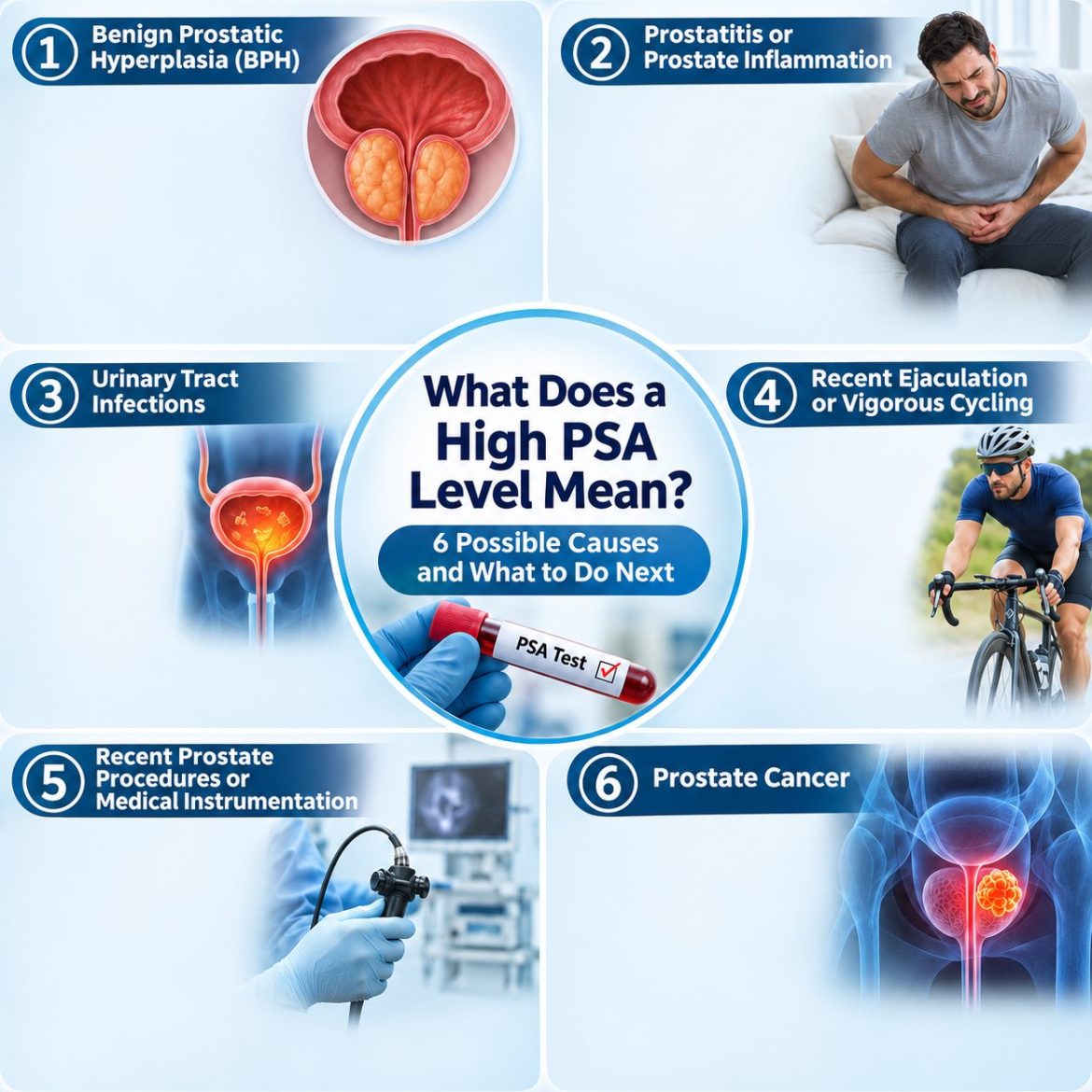
What happens when a routine blood test reveals an unexpectedly high PSA level?
For many men, the result immediately raises concerns about prostate cancer. However, an elevated prostate-specific antigen (PSA) level does not automatically indicate a malignant condition.
PSA is a protein produced by the prostate gland, and its concentration in the blood can increase for several reasons. Understanding these causes helps patients interpret their results more accurately and determine when additional medical investigations may be necessary.
What Does an Elevated PSA Level Actually Mean?
A PSA test measures the concentration of prostate-specific antigen in the bloodstream. Although elevated readings can indicate an increased risk of prostate cancer, they may also result from non-cancerous conditions or temporary physiological changes.
There is no universal PSA threshold that reliably distinguishes cancer from other conditions. Age, prostate size, medical history, and previous results all influence clinical interpretation.
Men looking for information about a PSA test UAE can learn how the examination works and why an elevated result may require additional assessment.
1. Benign Prostatic Hyperplasia (BPH)
Benign prostatic hyperplasia refers to non-cancerous enlargement of the prostate gland. It becomes increasingly common as men age and can cause PSA concentrations to rise.
An enlarged prostate may also produce urinary symptoms, including frequent urination, difficulty starting urination, and a weakened urinary stream.
What to do next: A urologist may assess prostate size and urinary symptoms before recommending monitoring, medication, or procedural treatment when necessary.
2. Prostatitis or Prostate Inflammation
Prostatitis occurs when the prostate becomes inflamed, sometimes because of a bacterial infection. This inflammation can cause PSA levels to increase temporarily.
Affected individuals may experience pelvic discomfort, painful urination, fever or difficulty emptying the bladder. However, symptoms vary depending on the underlying cause.
What to do next: Treatment depends on the diagnosis. Bacterial infections generally require antibiotics, while other forms of prostatitis may need different approaches to symptom management.
3. Urinary Tract Infections
Urinary tract infections can occasionally contribute to elevated PSA readings, particularly when inflammation affects the prostate. Common symptoms include burning during urination, increased urinary frequency, and discomfort in the lower abdomen. Some patients may also experience fever or generally feel unwell.
What to do next: Doctors may request urine tests to identify an infection. When treatment is required, PSA testing may be repeated after the infection has resolved.
4. Recent Ejaculation or Vigorous Cycling
Certain activities can temporarily influence PSA measurements without indicating an underlying disease. Ejaculation and vigorous physical activities involving pressure around the pelvic region, particularly cycling, may produce short-term increases in PSA concentrations.
What to do next: Patients are commonly advised to avoid ejaculation and activities that may temporarily increase PSA for approximately 48 hours before testing. Following the laboratory’s preparation instructions helps improve result reliability.
5. Recent Prostate Procedures or Medical Instrumentation
Medical procedures involving the prostate or urinary tract can sometimes affect PSA readings. A recent prostate biopsy, cystoscopy, or urinary catheterisation may influence results, particularly when associated with tissue irritation, inflammation, or infection.
What to do next: Patients should inform their healthcare professional about recent procedures. The doctor can determine an appropriate interval before repeating the blood test.
6. Prostate Cancer
Although elevated PSA does not confirm cancer, prostate cancer remains an important possible explanation, particularly when PSA levels remain high or increase over successive examinations.
Early prostate cancer frequently causes no noticeable symptoms. Consequently, medical assessment may be necessary even when an individual otherwise feels healthy.
What to do next: A urologist may recommend additional investigations, including prostate magnetic resonance imaging (MRI) or a biopsy when clinically appropriate.
What Should Men Do After Receiving a High PSA Result?
An elevated PSA result should prompt careful interpretation rather than immediate assumptions about cancer. The first step generally involves discussing the result with a healthcare professional. Doctors consider age, family history, urinary symptoms, medications, and previous PSA measurements.
In many cases, a repeat blood test is recommended before more invasive investigations. If PSA remains elevated, further assessments may be appropriate. Specialist medical institutions, including cleveland clinic abu dhabi, provide access to urological evaluation and diagnostic services that can help investigate abnormal prostate-related findings.
Importantly, patients should not independently begin antibiotics or other treatments simply to lower PSA levels. Medical intervention must address an established condition rather than the laboratory result alone.
Conclusion
A high PSA level can arise from several conditions, including prostate enlargement, inflammation, infection, and prostate cancer. Temporary influences may also affect test results.
The most appropriate response is to obtain professional advice, understand the possible causes, and complete recommended follow-up examinations. Careful evaluation can help distinguish harmless fluctuations from conditions requiring further investigation.
Key Takeaways
- An elevated prostate-specific antigen (PSA) level does not automatically indicate prostate cancer, as it can result from benign conditions or temporary physiological changes.
- Benign prostatic hyperplasia (BPH), which refers to non-cancerous enlargement of the prostate gland, commonly causes increased PSA concentrations as men age.
- Prostatitis, or inflammation of the prostate, can temporarily elevate PSA levels, with symptoms varying based on the underlying cause.
- Activities like recent ejaculation and vigorous cycling can temporarily increase PSA measurements without an underlying disease.
- Recent medical procedures involving the prostate or urinary tract may affect PSA readings, necessitating a discussion with healthcare professionals about when to repeat tests.
- Regardless of the cause, an elevated PSA result should prompt careful interpretation and professional medical advice before any treatments are initiated.